
Does My Dog Need TPLO Surgery? How to Recognize a Torn CCL
If your dog suddenly starts limping on a back leg, holds the paw up or barely touches the toe to the ground, sits with one leg kicked out to the side, or is stiff after rest, a torn cranial cruciate ligament (CCL) is one of the most likely explanations — it’s the most common orthopedic injury in dogs. And if the tear is confirmed, TPLO surgery is the treatment most often recommended for medium, large, and active dogs because of its consistently strong outcomes.
The CCL is the canine version of the ACL that ends athletes’ seasons. But the way dogs tear it is different from the way humans do — and understanding that difference explains a lot about the symptoms you may be seeing at home.
What Is the CCL, and Why Do Dogs Tear It?
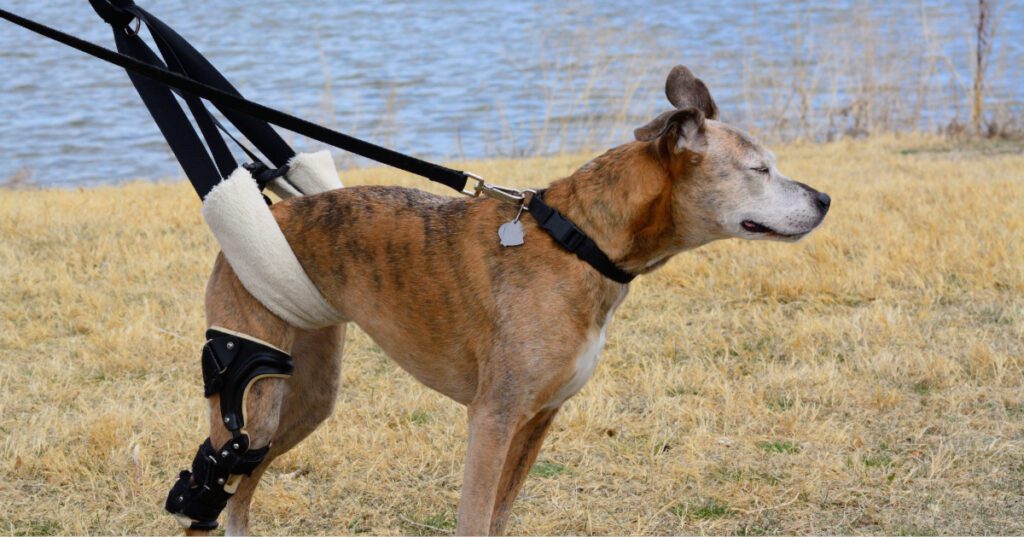
The cranial cruciate ligament is the main stabilizer inside a dog’s knee (stifle), the equivalent of the ACL in people. Here’s the key difference: humans usually tear an ACL in one dramatic moment on a ski slope or basketball court, while in most dogs the ligament weakens and frays gradually over months or years, then finally gives way — sometimes during something as ordinary as chasing a ball or hopping off the couch. That’s why so many owners say “but nothing happened.” Often nothing dramatic did; the ligament had been degenerating quietly. It also explains why the lameness in some dogs comes and goes early on: a partially torn ligament hurts intermittently before it fails completely.
What Are the Signs of a Torn CCL in a Dog?
The classic signs are limping on a hind leg (from a subtle hitch to carrying the leg entirely), toe-touching where the paw barely brushes the ground, sitting with the affected leg extended out to the side instead of tucked squarely underneath, stiffness after rest that improves with movement, difficulty rising or jumping into the car, and reluctance on stairs. In longer-standing cases, you may notice the muscle of the affected thigh shrinking compared to the other side — the leg simply isn’t being used as much. Any hind limb lameness that lasts more than a day or two, or that keeps returning, deserves an exam.
Can a Torn CCL Heal on Its Own?
No — a torn CCL does not regrow or repair itself. Some dogs, particularly small ones, may appear to improve with strict rest and anti-inflammatories as the body stabilizes the joint with scar tissue, but the knee remains mechanically unstable, and that instability grinds away at the joint, driving arthritis forward. For medium and large dogs especially, surgery is generally the recommendation, because their size and activity level make a “just rest it” approach far less likely to produce an acceptable outcome. The goal of surgery isn’t just to fix today’s limp — it’s to slow the arthritis that instability would otherwise guarantee.
How Is a CCL Tear Diagnosed?
Diagnosis starts with an orthopedic exam, where the veterinarian feels for the abnormal movement an intact CCL is supposed to prevent — specific manipulations of the knee that reveal instability. Some dogs guard the leg well enough that sedation is needed for a proper assessment. X-rays are typically taken as well; the ligament itself doesn’t show up on an X-ray, but the images reveal the telltale changes in the joint, show how much arthritis is already present, rule out other causes of lameness, and provide the measurements needed for surgical planning if TPLO is the path forward.
What Happens If a Torn CCL Goes Untreated?
The knee stays unstable, arthritis progresses, the thigh muscle continues to shrink, and pain becomes the dog’s normal — often masked by how well dogs hide discomfort. There’s a second consequence people don’t see coming: the dog shifts weight onto the opposite hind leg, and roughly half of dogs that tear one CCL go on to tear the other. Addressing the injured knee promptly protects the healthy one from carrying a double load, and the earlier a stable knee is restored, the less arthritis gets baked in along the way.
TPLO Surgery by a Board-Certified Surgeon at Saratoga Veterinary Hospital
Here’s something most pet owners in our area don’t realize: you don’t have to travel to a distant referral center for specialist-level knee surgery. At Saratoga Veterinary Hospital in Wilton, TPLO procedures are performed by a board-certified veterinary surgeon — the highest level of surgical credential in the profession — inside the AAHA-accredited, family-owned hospital that’s cared for this community’s pets for over 50 years. If your dog is limping on a back leg, don’t wait for it to become the new normal. Call (518) 587-3832 or visit saratogavethosp.com to schedule an orthopedic evaluation.
Learn More About Cruciate Ligament Care
Looking to dive deeper? These articles provided by LifeLearn more detailed information about cruciate ligament injuries, the different surgical techniques available, and how each procedure can help restore your dog’s mobility and quality of life.
Recent Posts
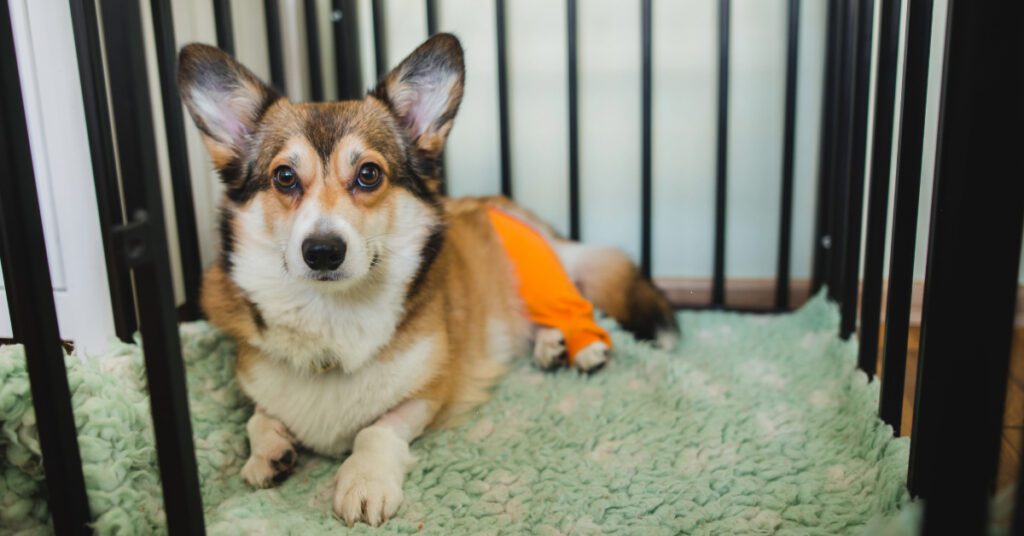
TPLO Recovery Timeline: A Week-by-Week Guide to Getting Your Dog Back on All Fours
TPLO Recovery Timeline: A Week-by-Week Guide to Getting Your Dog Back on All Fours Most dogs recovering…
TPLO vs. Other CCL Surgery Options: Why a Board-Certified Veterinary Surgeon Matters
TPLO vs. Other CCL Surgery Options: Why a Board-Certified Veterinary Surgeon Matters TPLO (tibial plateau leveling osteotomy)…
Retained Baby Teeth Removal During Spay/Neuter: Protecting Your Pet’s Oral Health
Retained Baby Teeth Removal During Spay/Neuter: Protecting Your Pet’s Oral Health Many Saratoga Springs pet owners dedicate…
Pet Dental Care: The Key to a Longer, Healthier Life
Pet Dental Care: The Key to a Longer, Healthier Life Pet dental care is one of the…

Dog Throwing Up Yellow: A Guide for Pet Owners
Dog Throwing Up Yellow: A Guide for Pet Owners If your dog is throwing up yellow foam…
About Saratoga Veterinary Hospital
Saratoga Veterinary Hospital is proud to serve as your local veterinarian of choice in WIlton, NY and the surrounding areas. Since its founding in 1973 by Dr. Sofarelli, our animal hospital’s main goal has been to strengthen the human-animal bond with exceptional veterinary medicine and client services.