Promoting Healing with Pet Laser Therapy
Laser therapy for dogs, cats, and many other pets offers a drug-free, non-invasive pain relief option that also has no major side effects. At Saratoga Veterinary Hospital, an independently owned, family-owned animal hospital, we’re pleased to be able to offer this service to pets of Wilton, Greenfield, South Glens Falls, and the surrounding Saratoga Springs area. Our therapeutic laser emits different wavelengths of light energy which penetrate deep into the tissue, stimulating cell production and other physiological changes.
Pet laser therapy:
- Speeds healing by increasing cell energy and productivity
- Reduces inflammation by promoting better circulation
- Relieves pain by prompting the release of the body’s natural pain killers (endorphins)
Call us today at (518) 587-3832 for a Laser Therapy consultation with one of our experts.
What Happens at a Laser Therapy Session?
If laser therapy is recommended, one of our trained veterinary technicians will perform the treatment under the guidance of your veterinarian. As an independently owned, family owned practice, we take time to ensure each session is tailored to your pet’s comfort and condition.
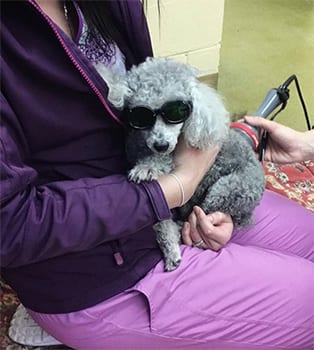
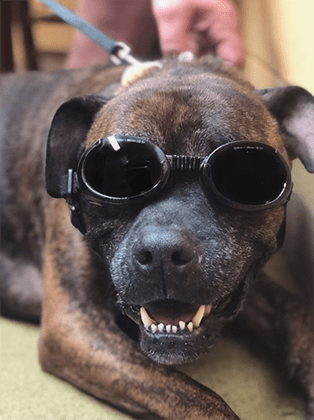
During treatment, your pet and anyone in the room will wear protective goggles, as the laser should not be viewed directly. Sessions typically last between 10 and 30 minutes, depending on factors such as your pet’s condition, coat length, and coat color.
For acute issues, some pets may benefit after just one or two sessions. Chronic conditions often require multiple treatments per week at first, with frequency decreasing over time as improvement is seen. We’ll work with you to create a schedule that fits your pet’s needs.
Conditions We Treat with Laser Therapy
Pet laser therapy can be used on almost any pet, of any age, for any condition that causes pain. The only time we can’t use a therapeutic laser is if a pet has, or is suspected to have, cancer. Conditions we can use the laser for include:
- Post-operative recovery
- Wound healing
- Lick granulomas
- Hot spots
- Arthritis
- Intervertebral disk disease
- Sprains, strains, and tears
- Orthopedic problems
- And many more