


Cat Nails: A Guide to Trimming and Care
Cat nail care is something every cat owner needs to know about, but it doesn’t always get the attention it deserves. Overgrown cat claws can curl into your cat’s paw pads, cause pain, and create serious health problems, yet many cats never get regular nail trims. Whether you’re wondering how to trim cat nails at home, how often it needs to be done, or what to do if your cat refuses to cooperate, this guide covers it all. Read on for everything Saratoga Springs cat owners need to know about keeping their cat’s nails healthy and well-maintained or call Saratoga Veterinary Hospital at (518) 587-3832 to schedule an appointment.
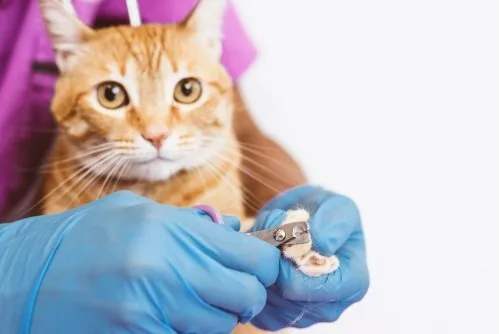
Why Does My Cat Need Regular Nail Trims?
Cat nails grow continuously throughout your cat’s life. In the wild, cats naturally wear down their claws through hunting, climbing, and scratching on rough surfaces. Indoor cats and less active cats don’t get those same opportunities, which means their cat claws can grow faster than they’re worn down.
Overgrown cat nails are more than an inconvenience. The outer layer of a cat’s nail sheds periodically as part of normal claw growth, but the inner structure including the quick (the blood vessel and nerve inside the nail) continues to grow. When cat claws get too long, they begin to curve. If left untrimmed, they can grow in a circle and eventually embed into the paw pad, causing significant pain and creating a wound that can become infected.
Senior cats are particularly vulnerable to overgrown nails because their activity levels decrease and they may scratch less frequently. Regular cat nail trimming is an important part of senior cat care.
How Often Should I Trim My Cat’s Nails?
Most cats benefit from a nail trim every two to four weeks. The exact frequency depends on your cat’s age, activity level, and how quickly their nails grow. Younger, more active cats that scratch regularly may need less frequent trimming, while older or less active cats may need trims closer to every two weeks.
A simple way to gauge whether your cat’s nails need trimming is to listen. If you hear their claws clicking on hard floors when they walk, it’s time for a trim. You can also gently press on your cat’s paw to extend the claw and visually check the length and curvature.
How Do I Trim My Cat’s Nails at Home?
Trimming cat nails at home is very achievable with the right tools, technique, and a little patience. Here’s what you need to know to do it safely.
What Tools Do I Need for Cat Nail Trimming?
Use a pair of cat-specific nail clippers. There are two common styles: scissor-style clippers and guillotine-style clippers. Both work well; choose whichever feels most comfortable in your hand. Keep the blades sharp. Dull clippers can crush the nail rather than cutting cleanly, which is uncomfortable for your cat. Styptic powder is a useful item to have on hand in case you accidentally cut too close to the quick.
Understanding the Quick
The quick is the pink, triangular-shaped area inside the cat nail that contains blood vessels and nerves. Cutting into the quick causes bleeding and discomfort. On light-colored cat claws, the quick is usually visible as a pinkish area inside the translucent nail. Trim just in front of it. On darker nails, it’s harder to see, so take small clips and go slowly.
If you accidentally cut the quick, apply styptic powder to the nail tip to stop the bleeding. It’s not a veterinary emergency, but it’s uncomfortable for your cat, so applying styptic powder quickly helps limit the experience.
Step-by-Step: How to Trim Cat Nails
- Choose a calm, quiet time when your cat is relaxed
- Sit your cat in your lap or on a stable surface and gently hold one paw
- Press gently on the top of the paw to extend the claws
- Identify the quick and trim the sharp, curved tip of the nail just ahead of the quick
- Trim one or two nails at a time if your cat is resistant, and take breaks as needed
- Reward your cat with a treat or favorite activity after the session
Don’t forget the dewclaws. The small claws on the inner side of the front legs (and sometimes the back legs). Dewclaws don’t touch the ground and don’t wear down naturally at all, making them especially prone to overgrowing and curling into the paw.
What If My Cat Won’t Let Me Trim Their Nails?
Many cats resist nail trims, especially if they weren’t accustomed to handling as kittens. If your cat finds the process stressful, there are ways to make it more manageable over time.
Desensitization is the most effective long-term approach. Start by simply handling your cat’s paws daily during relaxed moments, without any clipping involved. Once your cat is comfortable with paw handling, introduce the clippers by letting them sniff the tool, then touching the clippers to the paws without cutting. Gradually work up to actual trimming over days or weeks. Pairing every step with high-value treats helps build a positive association.
If your cat remains too stressed or difficult to handle safely, professional cat nail trimming at a veterinary clinic is always an option. Our team at Saratoga Veterinary Hospital in Wilton, NY handles cat nail trims with care and can show you techniques to make home trimming easier.
What Are Signs That My Cat’s Nails Need Veterinary Attention?
Routine cat nail trimming is something most owners can manage at home or with professional grooming support. However, there are situations where a veterinarian needs to evaluate your cat’s nails and paws:
- A claw has grown into the paw pad. This requires veterinary care to remove safely and treat any infection
- Redness, swelling, discharge, or a foul odor around the nail or paw
- A broken or cracked cat nail that is causing pain or bleeding significantly
- Your cat is limping or excessively licking one paw
- Nail changes in color, texture, or thickness that are new or progressive
Small Task, Big Impact: Nail Care as Part of Your Cat’s Health Routine
Regular cat nail trimming is one of the simplest things you can do to protect your cat’s comfort and long-term well-being. It takes only a few minutes every couple of weeks, and it prevents pain, injury, and costly veterinary treatment down the road. Whether you trim cat nails at home or rely on professional help, what matters most is that it gets done consistently.
The team at Saratoga Veterinary Hospital near Saratoga Springs, NY is here to support your cat’s complete health, from routine nail trims to full wellness care. Call us at (518) 587-3832 to schedule an appointment or ask about our nail trim services.
Recent Posts

TPLO Recovery Timeline: A Week-by-Week Guide to Getting Your Dog Back on All Fours
TPLO Recovery Timeline: A Week-by-Week Guide to Getting Your Dog Back on All Fours Most dogs recovering…

TPLO vs. Other CCL Surgery Options: Why a Board-Certified Veterinary Surgeon Matters
TPLO vs. Other CCL Surgery Options: Why a Board-Certified Veterinary Surgeon Matters TPLO (tibial plateau leveling osteotomy)…
Does My Dog Need TPLO Surgery? How to Recognize a Torn CCL
Does My Dog Need TPLO Surgery? How to Recognize a Torn CCL If your dog suddenly starts…

Retained Baby Teeth Removal During Spay/Neuter: Protecting Your Pet’s Oral Health
Retained Baby Teeth Removal During Spay/Neuter: Protecting Your Pet’s Oral Health Many Saratoga Springs pet owners dedicate…

Pet Dental Care: The Key to a Longer, Healthier Life
Pet Dental Care: The Key to a Longer, Healthier Life Pet dental care is one of the…
About Saratoga Veterinary Hospital
Saratoga Veterinary Hospital is proud to serve as your local veterinarian of choice in WIlton, NY and the surrounding areas. Since its founding in 1973 by Dr. Sofarelli, our animal hospital’s main goal has been to strengthen the human-animal bond with exceptional veterinary medicine and client services.